
The best time for a Teotihuacán balloon ride is the dry season, November to April, when every month averages under about 31 mm of rain at the San Martín de las Pirámides weather station. December to February are the driest and the coldest: dawn lows average about 2 °C, so dress for frost. Fly on a weekday early in your trip, so that a weather cancellation can move to another morning before you leave Mexico City.
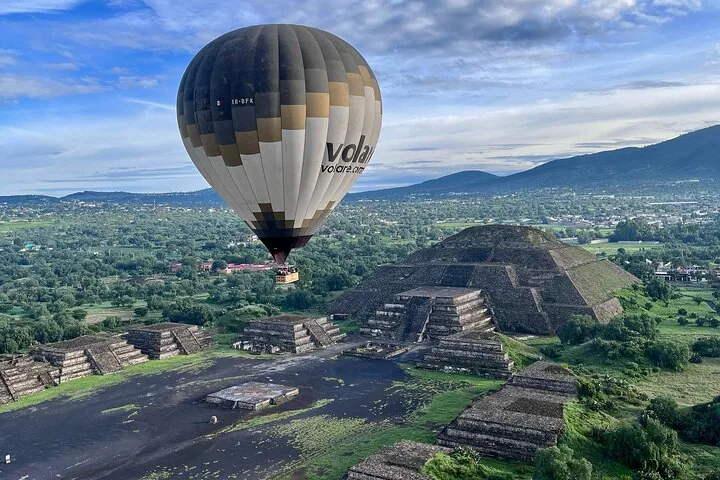
Teotihuacan Hot Air Balloon Flight from Mexico City / Volare
- 4.8/5 (4,438 reviews)
- 3–9 hours by option
- Free cancellation
- Operated by Volare
Includes Shared balloon flight of 30 to 50 minutes · Mexican breakfast at the balloon port · Tea and coffee before the flight
You'll choose your date and complete the booking on Viator. Free cancellation up to 24 hours before departure.
Dry season or rainy season: what the records show
Mexico’s national weather service, the SMN, kept a station at San Martín de las Pirámides, the municipality where most balloons take off, at about 2,300 m. Its monthly averages are an old record, roughly 1969 to 1988, but the neighboring Acolman station, still operating, shows the same shape. The valley has a long dry season and a summer rainy season.
From November to April, average rainfall stays low: 12.5 mm in November, 8.1 mm in December, 9.4 mm in January, 6.5 mm in February, 19.5 mm in March and 30.9 mm in April. Then it climbs fast. May averages 73.1 mm, June 106.4 mm, July 120.4 mm and August 110.5 mm, before September (69.0 mm) and October (46.1 mm) fall back. At Acolman September is wetter, at 112.7 mm, so treat September as a full rainy-season month.
The balloon operators say the same thing in their own words. We Fly Teotihuacan describes the dry season, roughly November to April, as bringing the clearest skies and the most reliable launches.
Rain does not rule out the rainy season. Weather reports for the Valley of Mexico, relaying the SMN, describe the summer rain as mostly afternoon and evening storms, and balloons fly at dawn. We Fly says summer mornings are often fine, while a rainy dawn can ground the flights. No one publishes cancellation rates by month. The dry season gives you better odds, and a summer flight is a reasonable gamble if you have a spare morning.
Wind is the other factor, and it is not confined to summer. Winter cold fronts bring strong gusts. On 1 February 2026 the operators cancelled every flight in the valley because of cold front number 32.
How cold the dawn is, month by month
The flight happens at the coldest moment of the day, in open country at about 2,300 m. The SMN station’s average minimum temperatures, which are night-to-dawn lows, run from 1.7 °C in January and 2.0 °C in February to 3.7 °C in March, 5.9 °C in April, and 8.5 to 9.0 °C from May to September. October averages 6.5 °C, November 3.9 °C and December 2.5 °C.
Those are averages. In December, January and February the average of each year’s lowest reading is below zero, about minus 2 to minus 3 °C at the two stations, and the record lows are minus 8 or minus 9 °C. Frost on the launch field is possible in midwinter.
The afternoons are another climate. Average highs at San Martín de las Pirámides are 24 to 29 °C year round, warmest in April and May, although the Acolman station reads several degrees cooler, so take the figures as a range. A December morning can start near freezing in the basket and finish in strong sun at the ruins. Dress in layers you can carry, and see our guide on what to wear. INAH, which runs the archaeological zone, recommends a hat, sunscreen and water for the site.
Volare serves its Mexican breakfast at the balloon port after the flight, which helps on a cold morning. Several of the other flights we review take you to a cave restaurant, where the air stays cool.
Other experiences
Other Teotihuacán balloon flights to compare
More ways to explore the area. Each listing shows its own cancellation policy.
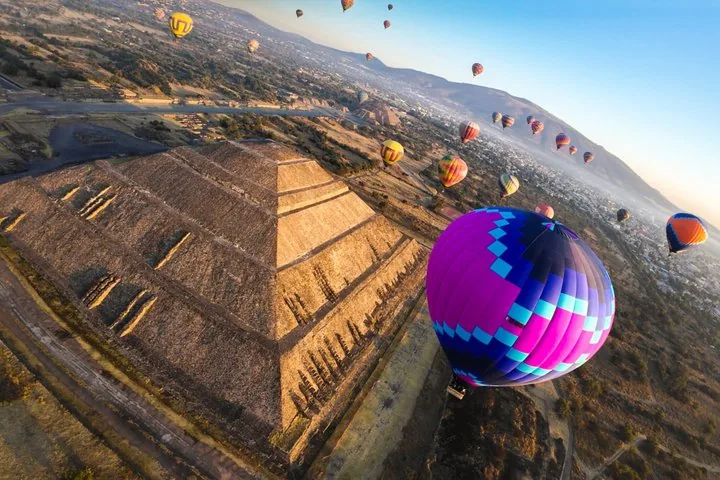
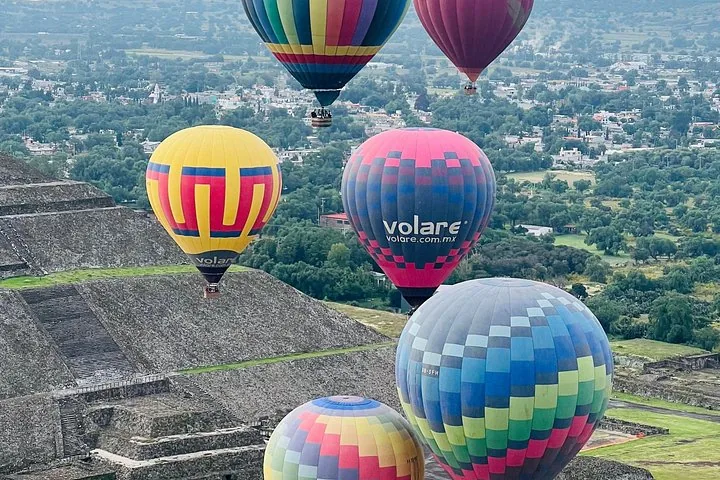
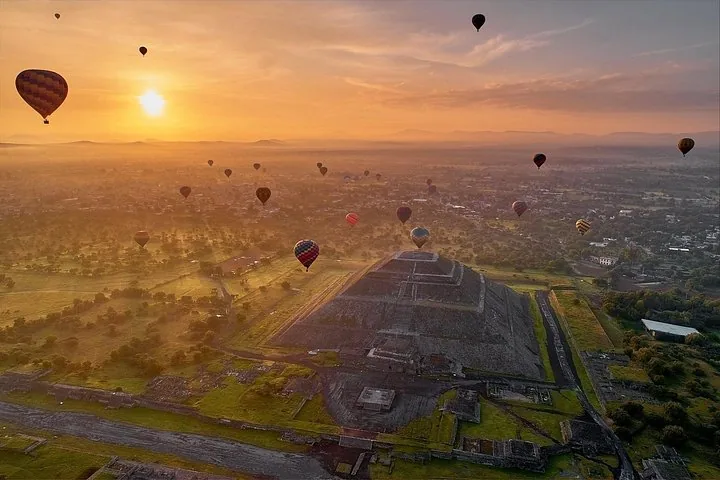
The year at a glance
| Month | Avg rain (SMP) | Avg dawn low (SMP) | Sunrise (computed) | Notes |
|---|---|---|---|---|
| January | 9.4 mm | 1.7 °C | about 7:05 to 7:13 | Driest stretch; frost possible; cold fronts |
| February | 6.5 mm | 2.0 °C | Driest month; all flights cancelled 1 Feb 2026 (cold front) | |
| March | 19.5 mm | 3.7 °C | 6:38 (21 March) | Dry; spring equinox crowds at the zone |
| April | 30.9 mm | 5.9 °C | Dry; warmest afternoons | |
| May | 73.1 mm | 8.5 °C | Rain starts mid-May | |
| June | 106.4 mm | 9.0 °C | 5:57 (21 June) | Rainy season; earliest sunrise |
| July | 120.4 mm | 8.8 °C | Wettest month | |
| August | 110.5 mm | 8.6 °C | Rainy season | |
| September | 69.0 mm | 8.4 °C | 6:24 (22 September) | Wet at Acolman (112.7 mm) |
| October | 46.1 mm | 6.5 °C | 6:33 (25 October) | Rains easing |
| November | 12.5 mm | 3.9 °C | Dry season begins | |
| December | 8.1 mm | 2.5 °C | 6:53 (1 Dec), 7:05 (21 Dec) | Dry and cold |
Rain and temperature are SMN monthly averages for the San Martín de las Pirámides station (SMP). Sunrise times are calculated for Teotihuacán’s coordinates in local time, which is UTC-6 all year because Mexico abolished daylight saving time in 2022 (outside some northern border areas).
Sunrise times and what they mean for your alarm
Balloons lift off at first light, so your start time follows the sun. In late December sunrise at Teotihuacán is about 7:05, with civil twilight from 6:41. On 21 March it is 6:38, on 22 September 6:24 and on 21 June 5:57, with twilight from 5:33. On 25 October 2026 the sun rose at 6:33.
You would expect winter pickups to be later than summer ones, and some operators do change their hours: Amigo Tours’ GetYourGuide listing says start times vary by season, with separate schedules for October to March and April to September. Others publish one check-in time year round, such as 5:30 a.m. at We Fly’s reception or 5:40 a.m. on the Fly Teotihuacan listing. The exact time comes in the confirmation message the day before. Our what to expect guide goes through the morning hour by hour.
Weekdays, weekends and holidays
There are no published figures on how many balloons fly on a weekday against a Saturday, and listing prices move with the date and the season. Two calendar facts at the archaeological zone are worth knowing, though, because most packages end there.
- Sundays: entry is free for Mexican nationals and foreign residents with ID, so the zone may be busier with local visitors. Foreign tourists without residency still pay MX$210.
- The spring equinox, around 21 March: INAH runs a special operation for the crowds, with a list of banned items, parking that closes when full and, in 2026, the site museums closed for the weekend.
If your dates are flexible and you want a quieter zone after the flight, avoid Sundays and the equinox weekend.
Why to book early in your trip
The pilot, and since 2026 an AFAC commission on site each morning, decides whether conditions allow a flight. If they do not, operators such as We Fly and Globos Aerostáticos Teotihuacán move you to another morning at no cost, and refund terms vary from company to company. A rescheduled flight only helps if you are still in Mexico City.
So book your flight for your first or second morning, and leave at least one free morning later in the stay. On Viator, listings marked free cancellation can be cancelled for a full refund up to 24 hours before the start time, which gives you a second exit if the forecast looks poor. Our weather and cancellations guide explains each operator’s policy, and our comparison of the best flights helps you choose one.
Frequently asked questions
What is the best month for a Teotihuacán balloon ride?
February is the driest month on the SMN record, at 6.5 mm, with December and January close behind. November to April as a whole is the dry season. The trade-off is cold: dawn lows average about 2 °C in midwinter.
Can you fly in the rainy season?
Yes. Flights run all year when conditions allow. Summer rain in the Valley of Mexico usually falls in the afternoon and evening, while a wet or very windy dawn grounds the balloons. Keep a backup morning.
What time is sunrise at Teotihuacán?
About 7:05 in late December, 6:38 at the March equinox, 5:57 in late June and 6:33 in late October, local time. Mexico City stays on UTC-6 all year.
How cold is it at dawn?
Average lows are about 2 to 4 °C from December to March, about 6 °C in April and October, and 8 to 9 °C from May to September. Frost is possible in winter.
Is it busier at weekends?
There is no published data on balloon numbers by day. At the archaeological zone, Sundays draw more Mexican visitors because entry is free for nationals and residents.
Pick your sunrise
Flights leave at dawn and the best dates in the dry season fill early. Compare options and check your date.
Check dates and prices